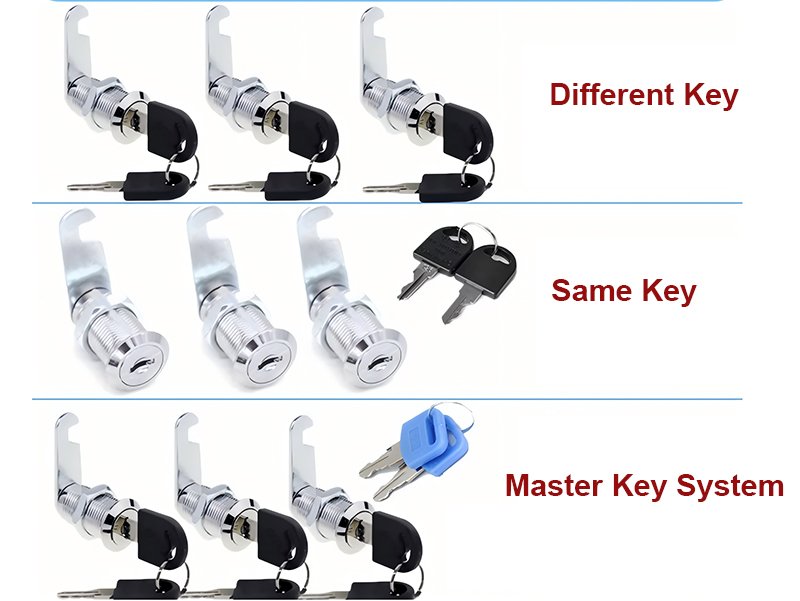
Same key, different key and master key management system
Same key or Keyed alike: It refers to a situation where multiple locks can be opened with the same key. This is often used in some large – scale buildings or facilities where different rooms or areas need to be managed efficiently. For example, in an office building, the property management may use the method of universal opening for the locks of each office to facilitate maintenance and emergency access. By using a same key, the management staff can open all the relevant locks, which greatly improves the efficiency of work. However, this also has certain security risks.
Different key: It means that each lock has a unique key code, and different locks cannot be opened with the same key. This method is mainly used in scenarios where high – level security is required. For instance, in a bank vault or a high – tech research laboratory, each lock is assigned a different key number. Only the authorized personnel with the corresponding key can open the specific lock. This ensures that the access to these important areas is strictly controlled, reducing the possibility of security breaches. Although it may be less convenient in management compared to same key or keyed alike, it provides a higher level of security.
Master management key system:
1.Master Keys
These are the top – level keys in the system. They are typically held by high – level administrators or security personnel. The master keys have the highest level of access privileges.
2.Secondary Keys
Secondary keys are issued to a lower level of management or specific staff members. They have more limited access compared to master keys. In factories, the system can be used to restrict access to dangerous areas, such as the machinery operation zones or chemical storage areas. Workers with secondary keys can only access the areas relevant to their work, while the master keys are used by supervisors and safety officers for comprehensive access.